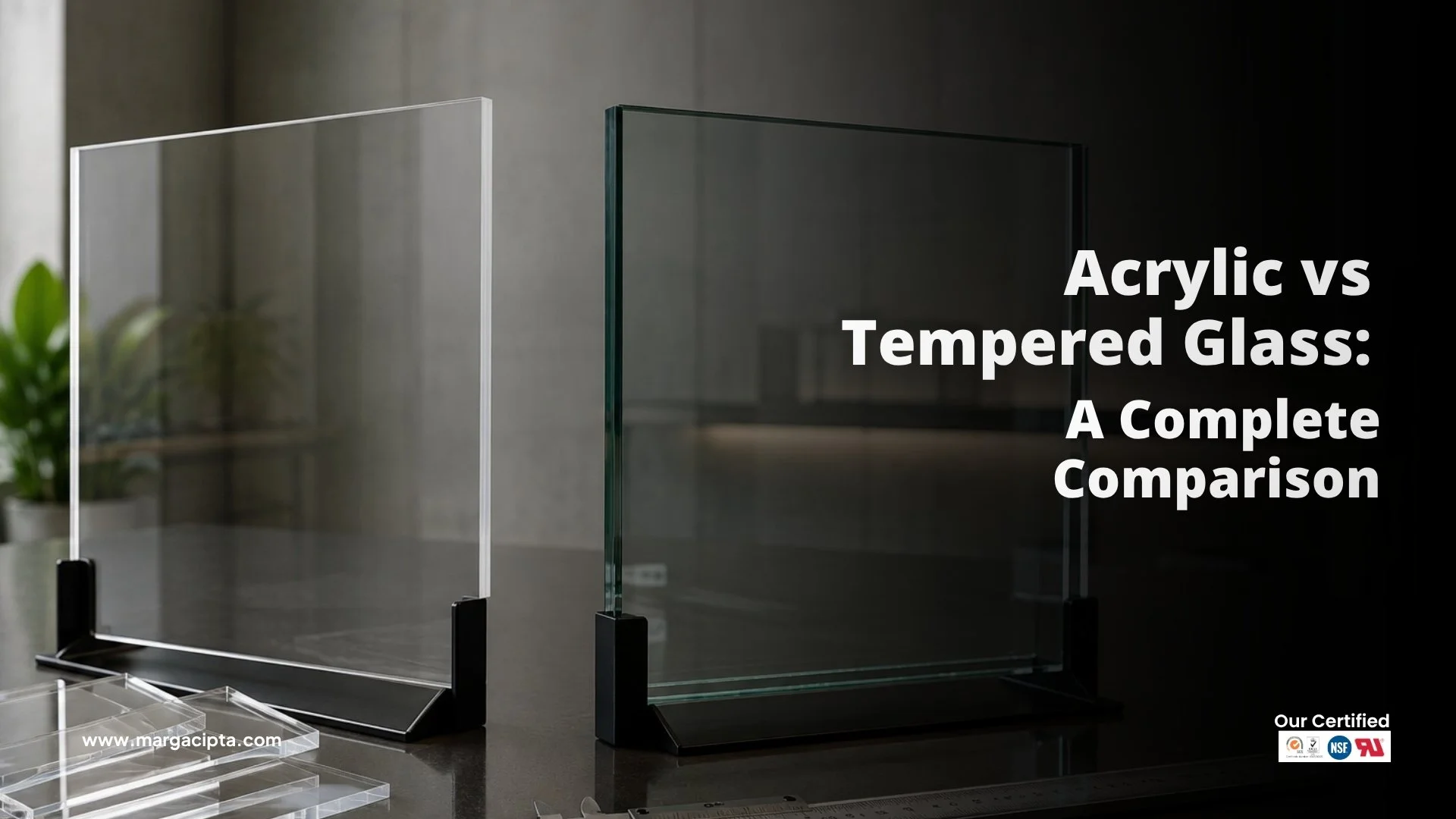
Acrylic vs Tempered Glass: A Complete Comparison

Informational

When comparing acrylic vs tempered glass, acrylic is generally the better choice for applications requiring lightweight construction, design flexibility, and impact resistance, while tempered glass is preferred for environments that demand superior scratch resistance and heat tolerance.

Although both materials offer excellent transparency, they differ significantly in weight, durability, fabrication, and cost. Understanding these differences helps businesses, designers, and fabricators select the most suitable material for their projects.

Acrylic vs Tempered Glass at a Glance

Here's a quick comparison.

Feature Acrylic Tempered Glass
Transparency Excellent Excellent
Weight Lightweight Heavy
Impact Resistance High Moderate
Scratch Resistance Moderate Excellent
Fabrication Easy Limited
Custom Shapes Excellent Difficult
Breakage Less likely to shatter Can shatter into small pieces

Both materials have strengths, but the best option depends on the intended application.

Read also: Best Acrylic Thickness for Ornaments: Size Guide for Perfect Results

Weight

One of acrylic's biggest advantages is its lightweight construction.

Acrylic sheets weigh approximately half as much as glass, making them easier to:

  • Transport
  • Install
  • Handle
  • Fabricate

For large signage, exhibition booths, and retail displays, this weight reduction can significantly lower installation effort and transportation costs.

Impact Resistance

Although tempered glass is much stronger than standard glass, acrylic generally offers higher impact resistance.

If subjected to accidental impact, acrylic is less likely to shatter into fragments.

This makes acrylic suitable for:

  • Retail displays
  • Protective barriers
  • Machine guards
  • Product showcases
  • Public display systems

Optical Clarity

Both materials provide excellent transparency.

Premium cast acrylic offers exceptional optical clarity that closely resembles glass while maintaining a lighter structure.

For many commercial applications, customers experience little visual difference between high-quality acrylic and tempered glass.

Fabrication Flexibility

Acrylic is significantly easier to fabricate.

It can be:

  • Laser cut
  • CNC machined
  • Thermoformed
  • Engraved
  • UV printed
  • Polished

Tempered glass, however, must be cut and processed before the tempering process. Once tempered, it cannot be drilled or reshaped.

This makes acrylic the preferred material for custom fabrication projects.

Cost Considerations

Project cost extends beyond the material price.

Because acrylic is lighter and easier to fabricate, businesses often benefit from:

  • Lower transportation costs
  • Faster installation
  • Reduced breakage risk
  • More affordable customization

These advantages can improve the overall cost efficiency of a project.

Common Applications

Acrylic

Ideal for:

  • Signage
  • Retail displays
  • Exhibition booths
  • Product displays
  • Interior design
  • Decorative panels

Tempered Glass

Commonly used for:

  • Shower enclosures
  • Building windows
  • Glass doors
  • Safety glazing
  • Architectural installations

Read also: Laser Cut Acrylic Sheet: Benefits, Applications, and Design Tips

Why High-Quality Acrylic Matters

The performance of acrylic depends on its quality.

Premium cast acrylic sheets provide:

  • Superior clarity
  • Better weather resistance
  • Consistent thickness
  • Excellent fabrication performance
  • Long-lasting durability

Marga Cipta manufactures premium cast acrylic sheets suitable for signage, displays, architecture, industrial fabrication, and custom projects.

Conclusion

When comparing acrylic vs tempered glass, acrylic offers greater versatility, lighter weight, and easier fabrication, making it the preferred material for many commercial and design applications.

For projects requiring custom fabrication, premium appearance, and long-term performance, high-quality acrylic sheets provide an excellent solution.

Source Premium Acrylic Sheets from Marga Cipta

Marga Cipta supplies premium cast acrylic sheets in various thicknesses, colors, and finishes for signage, displays, architectural projects, and custom fabrication.

For inquiries or orders, email info@margacipta.com.

For product updates, inspiration, and application ideas, follow Instagram @margacipta.


News Release

Can Acrylic Be Used Outdoors? Everything You Need to Know

Yes, acrylic can be used outdoors. In fact, acrylic is one of the most popular materials for outdoor signage, protective barriers, architectural features, and display applications due to its excellent weather resistance and optical clarity.

Unlike many plastics that degrade quickly when exposed to sunlight, high-quality acrylic sheets are designed to withstand outdoor conditions while maintaining their appearance for years.

If you're considering acrylic for an exterior project, understanding its outdoor performance can help you make the right material choice.

Why Acrylic Performs Well Outdoors

Acrylic is naturally resistant to many environmental factors that commonly affect plastic materials.

Some of its key outdoor advantages include:

  • Excellent UV resistance
  • Good weather durability
  • High optical clarity
  • Resistance to moisture
  • Long service life

Because of these characteristics, acrylic is frequently used in applications where both durability and appearance are important.

Read also: Acrylic vs Glass for Plaque: Which Material is Better?

How Does Acrylic Handle Sunlight?

One of the biggest concerns for outdoor materials is prolonged sun exposure.

High-quality acrylic sheets offer excellent UV resistance, helping them maintain their transparency and appearance over time. Unlike some plastics that yellow or become brittle after extended exposure to sunlight, acrylic generally retains its clarity much longer.

This makes acrylic a preferred choice for:

  • Outdoor signs
  • Storefront displays
  • Light boxes
  • Architectural glazing
  • Protective covers

Choosing premium acrylic sheets further improves long-term outdoor performance.

Is Acrylic Resistant to Rain and Humidity?

Yes. Acrylic is highly resistant to moisture and does not absorb water like some other materials.

As a result, acrylic can perform reliably in environments exposed to:

  • Rain
  • Humidity
  • Condensation
  • Coastal air

Its moisture resistance helps maintain dimensional stability and appearance even in changing weather conditions.

Common Outdoor Applications of Acrylic

Because of its combination of durability and aesthetics, acrylic is used in various outdoor projects.

Popular applications include:

1. Outdoor Signage

Acrylic provides excellent visibility and supports printing, engraving, and illuminated sign systems.

2. Protective Barriers

Transparent acrylic panels are commonly used for protection while maintaining visibility.

3. Architectural Features

Acrylic can be incorporated into canopies, decorative panels, and modern building elements.

4. Outdoor Displays

Retailers and event organizers often use acrylic for weather-resistant display systems.

Factors That Affect Outdoor Lifespan

Although acrylic performs well outdoors, several factors influence how long it lasts.

These include:

  • Material quality
  • UV exposure intensity
  • Installation method
  • Maintenance practices
  • Environmental conditions

Higher-quality acrylic sheets generally provide better long-term durability and appearance retention.

How to Maximize Outdoor Performance

To help acrylic last longer outdoors:

  • Use high-quality UV-resistant acrylic sheets
  • Clean surfaces using acrylic-safe cleaners
  • Avoid harsh chemical exposure
  • Ensure proper installation and support
  • Inspect periodically for maintenance

These simple practices can significantly extend the lifespan of outdoor acrylic applications.

Read also: Best Acrylic Thickness for Plaque: Complete Guide for Durable Results

Why Material Quality Matters

Not all acrylic sheets offer the same weather resistance.

Premium acrylic sheets typically provide:

  • Better UV stability
  • Improved optical clarity
  • More consistent performance
  • Greater durability over time

Marga Cipta supplies high-quality acrylic sheets suitable for signage, architectural projects, displays, and other outdoor applications.

Conclusion

So, can acrylic be used outdoors? The answer is yes.

With excellent UV resistance, moisture resistance, and long-term durability, acrylic is a reliable material for many exterior applications.

By selecting high-quality acrylic sheets and following proper maintenance practices, businesses and fabricators can achieve attractive and durable outdoor results.

Ready to explore our cast acrylic options? At Margacipta Wirasentosa, we offer high-quality clear cast acrylic sheets from 100% virgin MMA in various thicknesses and custom sizes to fit your needs.

Reach out to our Instagram or download our Product Catalog for more information.

100% Virgin MMA: The Key to High-Quality Acrylic Sheets

When it comes to producing premium acrylic sheets, the choice of raw materials makes all the difference. The highest-quality acrylic is manufactured using 100% virgin MMA (Methyl Methacrylate)

Unlike recycled or blended materials, virgin MMA guarantees outstanding clarity, strength, and long-term durability. 

This is why industries that demand precision and consistency, such as signage, architecture, medical, and food-related sectors, use acrylic made with virgin MMA.

What is Virgin MMA in Acrylic?

Methyl Methacrylate, or MMA, is the primary raw ingredient used in acrylic sheet production. When a sheet is labeled 100% virgin MMA, it means the acrylic is made from pure, first-use material with no recycled additives. 

This ensures that the end product is free from impurities, bubbles, or inconsistencies that could affect appearance and performance. By contrast, recycled or mixed-content acrylic often suffers from discoloration, reduced clarity, and shorter lifespan. 

For applications where quality is non-negotiable, virgin MMA remains the industry’s preferred standard.

Read also: What Is Cast Acrylic Used For? A Closer Look

Advantages of 100% Virgin MMA in Acrylic Sheets

1. Exceptional Clarity

One of the most visible advantages of virgin MMA acrylic is its crystal-clear transparency. With excellent light transmission up to 92%, these sheets rival the clarity of glass while being lighter and safer. 

This makes acrylic ideal for signage, displays, and architectural features where visual impact matters.

2. Stronger and More Durable

Acrylic made from recycled content can become brittle over time. 

In contrast, 100% virgin MMA produces sheets with superior impact strength and durability. They are less likely to crack, making them suitable for heavy-duty applications such as construction panels, protective barriers, and furniture.

3. Consistent Quality

Virgin MMA eliminates impurities that often cause uneven color or thickness. As a result, every sheet maintains uniform optical and mechanical properties

This consistency is critical for industries that require reliable materials, such as medical equipment manufacturing and precision engineering.

4. Better Weather and UV Resistance

Outdoor projects demand materials that can withstand sunlight, rain, and temperature changes.

Virgin MMA-based acrylic is resistant to yellowing, warping, and degradation, making it perfect for outdoor signage, skylights, and architectural.

5. Safe for Sensitive Applications

Because of its purity, virgin MMA acrylic is safer for environments where hygiene is a priority.

Certified sheets can be used in food displays, medical devices, and cleanroom facilities without risk of contamination. Some variants are even NSF-certified, ensuring compliance with international safety standards.

Read also: Why Cast Acrylic Is Better Than Glass: Benefits You Should Know

Applications of Virgin MMA Acrylic Sheets

The versatility of 100% virgin MMA acrylic makes it popular across industries:

  • Signage and Displays: Clear surfaces enhance print and lighting, delivering vibrant visuals.
  • Construction and Architecture: Used in windows, partitions, skylights, and decorative panels due to its durability.
  • Food Industry: NSF-certified acrylic ensures safety for food contact, ideal for display cases and hygienic covers.
  • Medical and Laboratory Equipment: Trusted for its purity and reliability in sensitive environments.
  • Furniture and Interior Design: Offers both aesthetics and functionality with long-lasting strength.

Choosing acrylic sheets made from 100% virgin MMA is an investment in quality, safety, and longevity. With superior clarity, strength, and resistance to outdoor conditions, virgin MMA ensures that acrylic sheets perform at the highest standard. 

Whether you are in signage, construction, food, or medical industries, selecting virgin MMA acrylic helps you achieve the best results.

PT Margacipta Wirasentosa produces high-quality acrylic using 100% virgin MMA, delivering consistent clarity, strength, and NSF-certified options (clear and white opal). Contact us to info@margacipta.com to get the right acrylic solution for your business.

Best Material for Display Stand: Acrylic or Glass?

For most retail and commercial applications, acrylic is generally the best material for display stands. It provides excellent transparency, is significantly lighter than glass, offers better impact resistance, and is easier to fabricate into custom designs.

While glass remains a premium material for certain luxury applications, acrylic delivers a more practical balance of aesthetics, durability, and cost efficiency.

Acrylic vs Glass at a Glance

Here's a quick comparison between the two materials.

Feature Acrylic Glass
Transparancy Excellent Excellent
Weight Lightweight Heavy
Impact Resistance High Low
Fabrication Easy Limited
Customization Excellent Moderate
Cost Efficiency High Moderate

For most display stand projects, acrylic provides greater flexibility without sacrificing appearance.

Read also: Acrylic Sheet for Retail Displays: Benefits, Applications, and Design Ideas

Clarity and Appearance

Both acrylic and glass offer a clean, transparent look that showcases products effectively.

However, high-quality acrylic sheets provide excellent optical clarity while offering more design flexibility through various finishes, including:

  • Clear
  • Frosted
  • Satin
  • Colored
  • Mirrored

These options allow businesses to create customized displays that match their branding.

Durability

Display stands are frequently moved, cleaned, and handled.

Acrylic performs well because it is more impact-resistant than glass. If accidentally dropped or bumped, acrylic is less likely to shatter.

Glass, while visually elegant, is more fragile and requires careful handling during transportation and installation.

Weight and Installation

Acrylic is considerably lighter than glass, making it easier to:

  • Transport
  • Install
  • Rearrange
  • Store

This advantage is especially valuable for exhibition displays, retail promotions, and modular merchandising systems.

Fabrication Flexibility

One of acrylic's biggest advantages is its compatibility with modern fabrication methods.

Acrylic sheets can be:

  • Laser cut
  • CNC machined
  • Thermoformed
  • Engraved
  • UV printed

This allows designers to produce highly customized display stands with clean edges and intricate details.

Glass generally requires more specialized processing and offers fewer customization options.

Cost Considerations

Acrylic is often the more cost-effective solution.

Lower transportation costs, easier fabrication, and reduced breakage risks contribute to better overall project value.

For businesses producing multiple display stands, acrylic offers significant long-term savings.

When Glass May Be Suitable

Although acrylic is preferred for most applications, glass may still be suitable for:

  • Luxury furniture
  • Permanent architectural installations
  • High-end decorative displays

However, these projects often involve higher installation costs and stricter handling requirements.

Read also: How to Bend Acrylic Sheet: Methods, Tools, and Best Practices

Why Material Quality Matters

Regardless of the material chosen, quality has a direct impact on the final result.

Premium acrylic sheets provide:

  • Better clarity
  • Consistent thickness
  • Cleaner fabrication
  • Improved durability
  • Long-lasting appearance

Marga Cipta supplies high-quality acrylic sheets suitable for display stands, retail displays, product showcases, and commercial fabrication projects.

Conclusion

When comparing the best material for display stand—acrylic or glass—acrylic is the preferred choice for most retail, commercial, and promotional applications.

Its combination of clarity, lightweight construction, durability, and fabrication flexibility makes it a reliable solution for modern display systems.

Build Better Display Stands with Marga Cipta

Looking for premium acrylic sheets for your next display project? Marga Cipta offers high-quality acrylic sheets in various sizes, thicknesses, and finishes to meet your fabrication needs.

For inquiries or orders, email info@margacipta.com.

For product updates, inspiration, and application ideas, follow Instagram @margacipta.
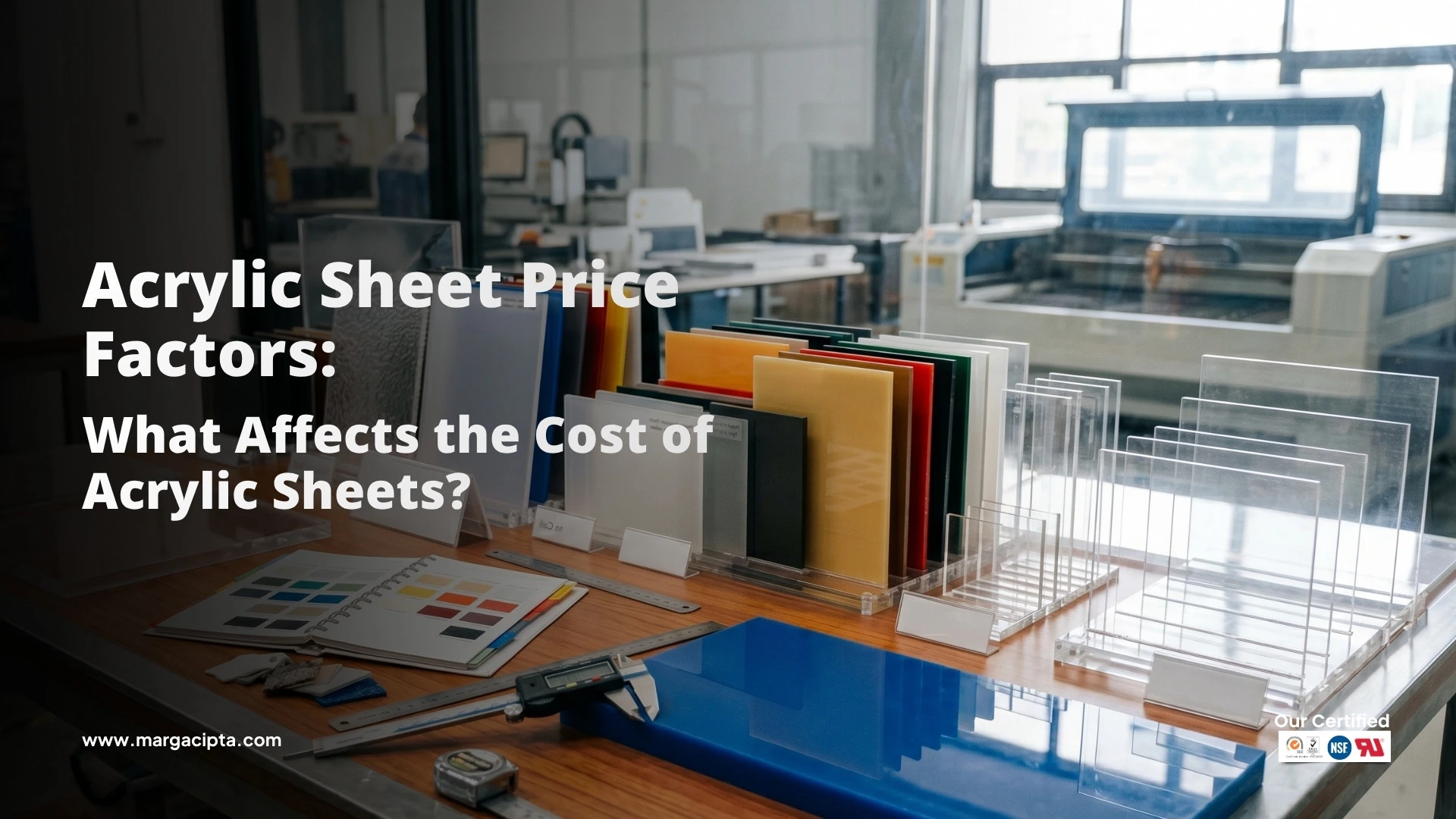
Types of Acrylic: Complete Guide to Different Acrylic Sheets and Their Uses

The main types of acrylic include cast acrylic, extruded acrylic, clear acrylic, colored acrylic, frosted acrylic, and mirrored acrylic.

Each type offers different characteristics, making them suitable for specific fabrication, signage, and decorative applications.

Understanding the different types of acrylic is important when selecting the right material for your project.

What is Acrylic?

Acrylic is a transparent thermoplastic material widely used as an alternative to glass. It is known for its excellent clarity, lightweight structure, and fabrication flexibility.

Compared to glass, acrylic is:

  • More impact resistant
  • Easier to fabricate
  • Lighter in weight
  • Available in various finishes and colors

These qualities make acrylic sheets popular across industries such as retail, construction, interior design, and manufacturing.

Read also: Best Acrylic Thickness for Ornaments: Size Guide for Perfect Results

1. Cast Acrylic

Cast acrylic is produced by pouring liquid acrylic into molds before curing.

This type is known for:

  • Excellent optical clarity
  • Better chemical resistance
  • Superior engraving quality
  • Stronger surface hardness

Cast acrylic is commonly used for:

  • Signage
  • Premium displays
  • Laser engraving
  • Decorative applications

Because of its high-quality finish, cast acrylic is often preferred for projects that require precision and aesthetics.

2. Extruded Acrylic

Extruded acrylic is manufactured through a continuous production process.

Compared to cast acrylic, it offers:

  • More affordable pricing
  • Consistent thickness
  • Easier thermoforming

It is commonly used for:

  • General fabrication
  • Protective panels
  • Cost-efficient production projects

While extruded acrylic is softer than cast acrylic, it remains a practical choice for many standard applications.

3. Clear Acrylic

Clear acrylic sheets are the most commonly used type.

They provide:

  • High transparency
  • Glass-like appearance
  • Smooth surface finish

Applications include:

  • Retail displays
  • Aquariums
  • Protective barriers
  • Signage

Clear acrylic is ideal when visibility and a clean aesthetic are priorities.

4. Colored Acrylic

Colored acrylic sheets are available in a wide range of solid and transparent colors.

Benefits include:

  • Consistent color throughout the sheet
  • Strong visual appeal
  • Better branding flexibility

Colored acrylic is often used for:

  • Decorative ornaments
  • Branding elements
  • Interior accents
  • Creative fabrication projects

5. Frosted Acrylic

Frosted acrylic features a matte surface that diffuses light. It is commonly selected for:

  • Privacy panels
  • Minimalist interior design
  • Elegant signage

Its soft appearance helps reduce glare and fingerprints.

6. Mirrored Acrylic

Mirrored acrylic provides a reflective surface similar to traditional mirrors but with lighter weight and better impact resistance.

Common applications include:

  • Decorative panels
  • Retail displays
  • Event decorations

It is available in various finishes such as silver, gold, and colored mirror effects.

How to Choose the Right Acrylic Type

Choosing the right acrylic depends on:

  • Application purpose
  • Fabrication method
  • Desired appearance
  • Budget considerations

For example:

  • Cast acrylic → better for engraving and premium designs
  • Extruded acrylic → suitable for cost-efficient fabrication
  • Frosted acrylic → ideal for elegant and modern finishes

Read also: Acrylic vs Glass for Plaque: Which Material is Better?

Why Material Quality Matters

High-quality acrylic sheets provide:

  • Better clarity
  • Consistent thickness
  • Improved fabrication performance

Using reliable materials helps reduce production issues and ensures professional results.

Marga Cipta supplies premium acrylic sheets in various types and finishes to support different fabrication and design needs.

Conclusion

Understanding the different types of acrylic helps you select the right material for your project.

From clear and colored acrylic to cast and mirrored finishes, each type offers unique advantages for specific applications. By choosing high-quality acrylic sheets, businesses and manufacturers can achieve more durable and visually appealing results.

Ready to explore our cast acrylic options? At Margacipta Wirasentosa, we offer high-quality clear cast acrylic sheets from 100% virgin MMA in various thicknesses and custom sizes to fit your needs.

Reach out to our Instagram or download our Product Catalog for more information.